Visual Agent Orchestration: The Missing Layer Between Code and Control
Multi-agent AI systems need more than terminal logs. Discover why visual orchestration is becoming essential for managing autonomous workflows at scale.
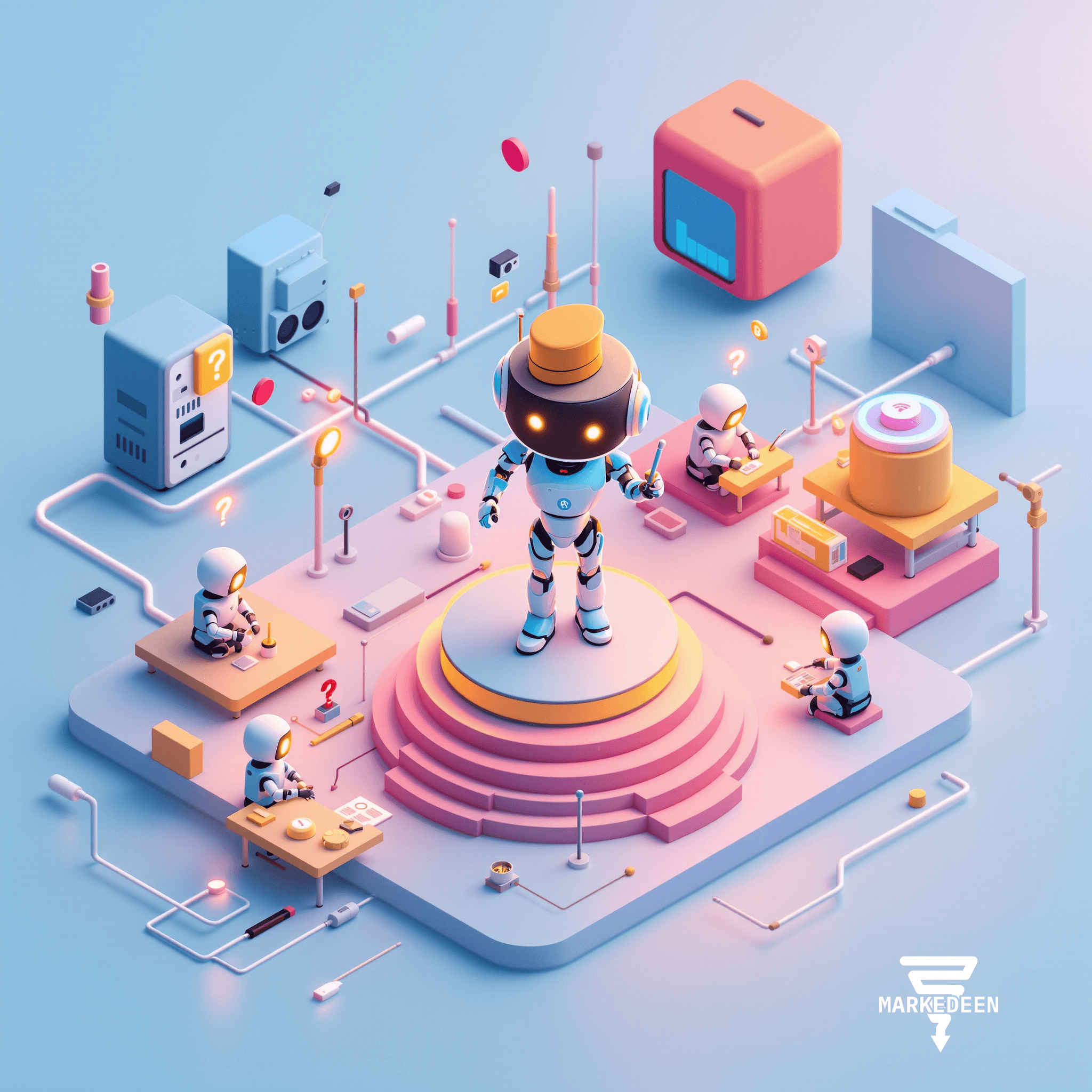
We've been watching a quiet problem grow louder in our automation practice: as AI agents multiply, visibility disappears.
A year ago, running one agent meant watching one terminal. Simple enough. Today? Five parallel coding agents, each spawning three sub-agents, all executing different parts of a workflow while you're trying to understand which one needs input and which one just hallucinated its way into a dependency nightmare.
The terminal hasn't kept pace with what we're actually building.
The Orchestration Blindness Problem
Here's what actually happens when you scale agent operations. You kick off a research workflow. Agent One delegates to Agent Two and Agent Three. Two finishes fast. Three gets stuck on an API limit. One is waiting for both before it compiles the report. You're flipping between four terminal windows trying to piece together who's doing what.
The work is asynchronous. Your visibility is not.
This isn't a minor UX annoyance. It's a genuine operational constraint. When you can't see your agents working, you can't intervene before they waste compute, can't load-balance effectively, and can't confidently hand more complex work to autonomous systems.
Management becomes archaeology. You're digging through logs after the fact instead of steering in real time.
What Visual Orchestration Actually Means
We're not talking about making terminals prettier. We're talking about spatial awareness for agent operations.
Visual orchestration surfaces three critical dimensions:
Hierarchy and delegation. When Agent A spawns Agents B, C, and D, you see the parent-child relationship instantly. Not by reading log timestamps, but by watching the structure form. This matters because delegation patterns reveal workflow efficiency. If every task spawns six sub-agents, something in your prompt architecture is wrong.
State at a glance. Idle. Working. Blocked. Finished. With five agents running, that's the information you need in two seconds, not two minutes. The faster you can triage state, the faster you can course-correct or pile on more work.
Parallel execution transparency. When three agents are researching different APIs simultaneously, you need to know which one finished, which one is rate-limited, and which one is burning tokens on a dead end. Sequential logs don't show you that. Spatial layout does.
This is the difference between running agents and conducting them.
Why This Matters for Business Operations
The technical novelty is interesting. The business capability is more interesting.
Visual orchestration changes what you can confidently automate.
Right now, most companies are hesitant to deploy multi-agent systems for anything mission-critical because the black-box problem is real. You can't manage what you can't see. That hesitation limits AI to contained, low-stakes tasks, content drafts, basic research, templated responses.
When you can monitor agent workflows in real time, the risk profile shifts. You're not hoping the system worked. You're watching it work. That unlocks:
Complex research pipelines where five agents pull different data sources, one synthesizes, and another validates against company knowledge bases. You can see where bottlenecks form and which agents need better context.
Parallel processing for large codebases where different agents tackle different modules, and you need to catch integration conflicts before they compound. Visual hierarchy shows you which agent is blocked waiting on another's output.
Delegated client work where you're comfortable letting agents handle discovery, drafting, and iteration while you supervise at the workflow level, not the keystroke level.
The pattern is consistent: visibility enables delegation. Delegation enables scale.
The Bigger Gap Still Unsolved
Visual orchestration as it exists today solves the "who's working" problem. It doesn't yet solve the "what are they building" problem.
Knowing that Agent Three is active tells you less than knowing Agent Three is about to refactor your database schema in a way you'd never approve. That's the next frontier: workflow visualization that shows not just agent state, but agent decisions.
Imagine watching an agent construct a workflow in real time the way you'd watch someone build a flowchart. Nodes appear. Connections form. You see the logic taking shape before it executes, and you can redirect mid-stream.
That's where visual orchestration needs to go. Not just dashboards of activity, but explorable maps of intent.
We're not there yet. But the trajectory is clear. As agents handle more consequential work, the systems that make them legible will become as important as the agents themselves.
Building With Visibility in Mind
If you're deploying multi-agent systems today, here's what we've learned matters:
Design for observability from the start. Don't bolt monitoring onto agents after they're built. Structure your workflows so state is externalized, not buried in agent memory. Use shared task lists, explicit handoffs, and status flags that surface cleanly.
Limit depth, not breadth. Five parallel agents are manageable. Five levels of nested sub-agents are not. Flatten your hierarchy where possible. Delegation is powerful until it becomes recursive chaos.
Test your intervention speed. Time how long it takes you to identify a stuck agent and redirect it. If it's more than 30 seconds, your visibility layer is costing you money. Compute waste compounds fast at scale.
The companies that figure out agent orchestration early will have a meaningful operational advantage. Not because their agents are smarter, but because their humans can manage more of them effectively.
What We're Watching
We're tracking three developments closely: native workflow visualization in agent frameworks, real-time decision trees that show reasoning chains, and collaborative agent interfaces that let multiple humans supervise different parts of a large system simultaneously.
The tooling is still early. But the need is already here. Every client running serious agent operations hits the same wall: terminal logs don't scale.
Visual orchestration is how you climb over it.
If you're building automation systems that are outgrowing simple monitoring, we'd be interested in comparing notes. The firms solving this problem early tend to be the ones thinking three moves ahead.
More on AI Agents
Want a system like this in your business?
We build the automation behind everything you just read.