The Operating System Layer: Why Advanced Teams Are Building AI Infrastructure Inside Claude Code
Advanced Claude Code users are building AI operating systems, centralized environments where agents access all business context in one place, eliminating the hours spent searching, switching apps, and reconstructing…
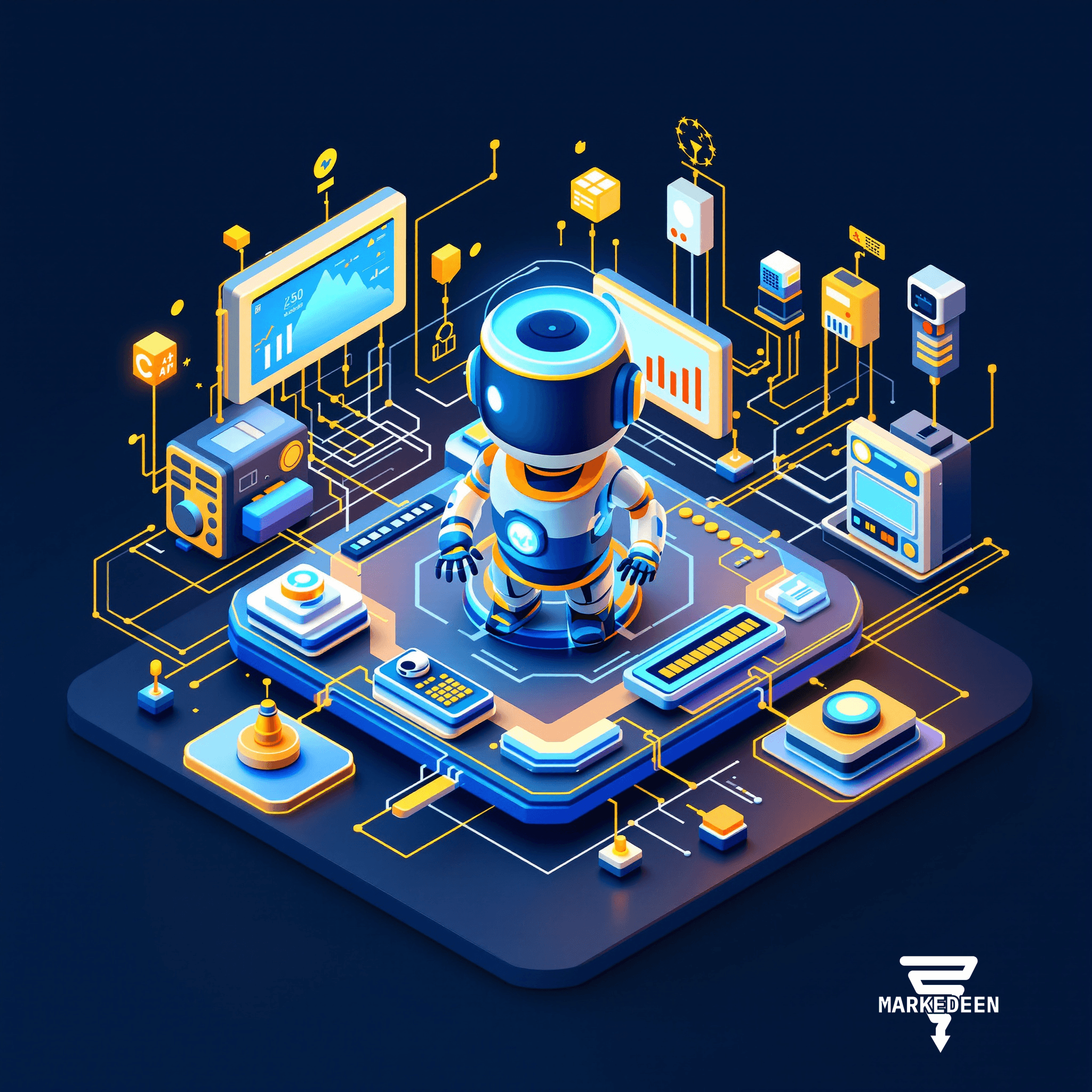
Advanced users aren't using Claude Code as a coding tool anymore. They're building something closer to an operating system, a unified environment where all business context lives in one place, agents can see and interact with everything, and memory outlasts the human attention span. Instead of clicking between apps to reconstruct what happened last week, they've collapsed their entire operational layer into a single intelligent surface. Files, communication, project management, quarterly goals, team decisions, it all lives where the agent lives. The result isn't just faster work. It's the elimination of an entire category of friction: the hours spent searching, context-switching, and rebuilding mental models every time you open a new tab.
What an AI Operating System Actually Looks Like
Think of your Mac OS or Windows, the layer between you and your machine where everything lives. Now imagine that layer has intelligence baked in. That's what's happening inside Claude Code for teams who've moved past the 'AI as helper' metaphor. One user runs a morning planning agent that scans their calendar, pulls from ClickUp, cross-references quarterly goals stored in text files, and blocks out the day without decision fatigue. Another spins up four parallel agents (one for research, one for content generation, one for a pulse check across projects, one for visualization) and watches them all work simultaneously, each with full access to the same business context.
The infrastructure includes project documentation, team information, communication archives, and proactive monitoring loops. An agent can check if a deployment is still running every ten minutes for three days straight. Another watches a task list in ClickUp and, when a new company appears, researches it and leaves a threaded comment, then continues the conversation when the human replies. This isn't a deterministic script following a fixed path. It's an agent with tools, memory, and discretion, living in the same environment where all your operational data already exists.
Why This Eliminates 'Work About Work'
The shift from 'AI tool' to 'AI infrastructure' matters because of what it removes. Knowledge workers spend staggering amounts of time on work about work: hunting for a Google Sheet from last month, remembering whether a file came via Slack or email, reconstructing decisions from fragmented threads. When your operating system has intelligence, that category of labor shrinks dramatically. The agent has better recall than you do. It can pull from the exact source faster than you can search. It doesn't forget, and it doesn't need to switch contexts, it already has the full picture.
One builder described spending an entire workday with only Claude Code open and still being more productive than colleagues clicking through a dozen apps. That's not hyperbole when the agent can access your communication, your project files, your task management, and your decision log without leaving the terminal. The 'operating system' metaphor is literal: it's the interface layer, and now it reasons.
How the System Gets Built: Skills and Integration Patterns
Building this kind of environment starts with treating Claude Code as infrastructure, not a chatbot. Advanced users structure their projects with skills, reusable instructions that teach the agent how to do specific work, and layer in hooks, sub-agents, and automation triggers. Skills are stored as text files that agents read like recipes. When everyone uses the same AI model, the differentiator is context: your taste, your voice, your decisions.
One widely-shared skill takes the 'interview me relentlessly' approach: it asks questions one at a time, checkpoints each answer into a knowledge document, and keeps drilling until there are no gaps. The result is skills that work reliably because the extraction process was rigorous, not rushed.
The integration layer matters too. Some teams connect Claude Code to Google Workspace using command-line tools, giving agents the ability to create formatted Docs, schedule meetings by reading calendar availability, and pull data from Sheets without manual exports. Others route automations through cloud deployment platforms, so agents don't just run on a laptop, they live remotely, triggered by webhooks or scheduled tasks, and operate around the clock.
The Productivity Claim, Grounded
The '10x productivity' framing usually sounds like marketing. Here, it's a structural claim about removing overhead. If you're spending significant time searching for context, switching between tools, and reconstructing what happened in the last sprint, you've lost capacity before you've done any actual work. An AI operating system collapses that overhead. It doesn't make the core work ten times faster, it removes the meta-work that was slowing everything down.
For knowledge businesses, this is the genuine unlock. Not because the AI writes better or thinks faster, but because the environment itself is intelligent. The agent doesn't need to be told where the files are, what the project goals were, or who decided what last quarter. It already knows.
What You Can Do With This Today
If you're already using Claude Code, the path is straightforward: start treating it like infrastructure. Move your project documentation into text files in the working directory. Build skills for recurring work. Set up loops for proactive monitoring. Connect external tools using command-line interfaces or MCP servers instead of switching to their web UIs. Give the agent access to your communication archives, decision logs, and goals documents. The more context you centralize, the more leverage you get from every interaction.
This isn't about replacing humans. It's about collapsing the distance between intention and execution, and eliminating the exhausting work of remembering, searching, and switching that fills the gaps in between.
---
We build these kinds of systems for clients who want the infrastructure advantage without the setup overhead. If you're curious whether this pattern fits your operational reality, we'd be happy to talk through what that looks like in practice.
More on Strategy
Want a system like this in your business?
We build the automation behind everything you just read.