From $10K Projects to 15-Minute Deliverables: How Generative Video Reframes Digital Asset Production
When professional video production drops from months and six figures to minutes and API calls, the bottleneck shifts from creation to orchestration—and that's.

We've been watching a fundamental shift in how digital assets get made.
Until very recently, producing a hero video for a premium website (the kind with custom location shoots, rotating product shots, smooth transitions) meant hiring a production house, spending five figures minimum, and waiting weeks. That constraint shaped how businesses approached their digital presence. You committed to a design direction early, lived with it for months, and hoped the market didn't shift before launch.
That constraint just evaporated.
Generative video tools now turn reference images and natural language prompts into broadcast-quality footage in minutes. What used to require location permits and equipment rental now happens through an API. The entire economics of visual content have been rewritten.
But here's what matters for business operations: the bottleneck has moved.
When asset creation was expensive and slow, the constraint was production capacity. Now the constraint is orchestration, knowing what to build, how to assemble it, and how to deploy it at speed. The companies that win aren't the ones with the best rendering hardware. They're the ones who can move from concept to live deployment while competitors are still briefing their creative agency.
We've been building systems that treat this new capability as infrastructure, not as a novelty.
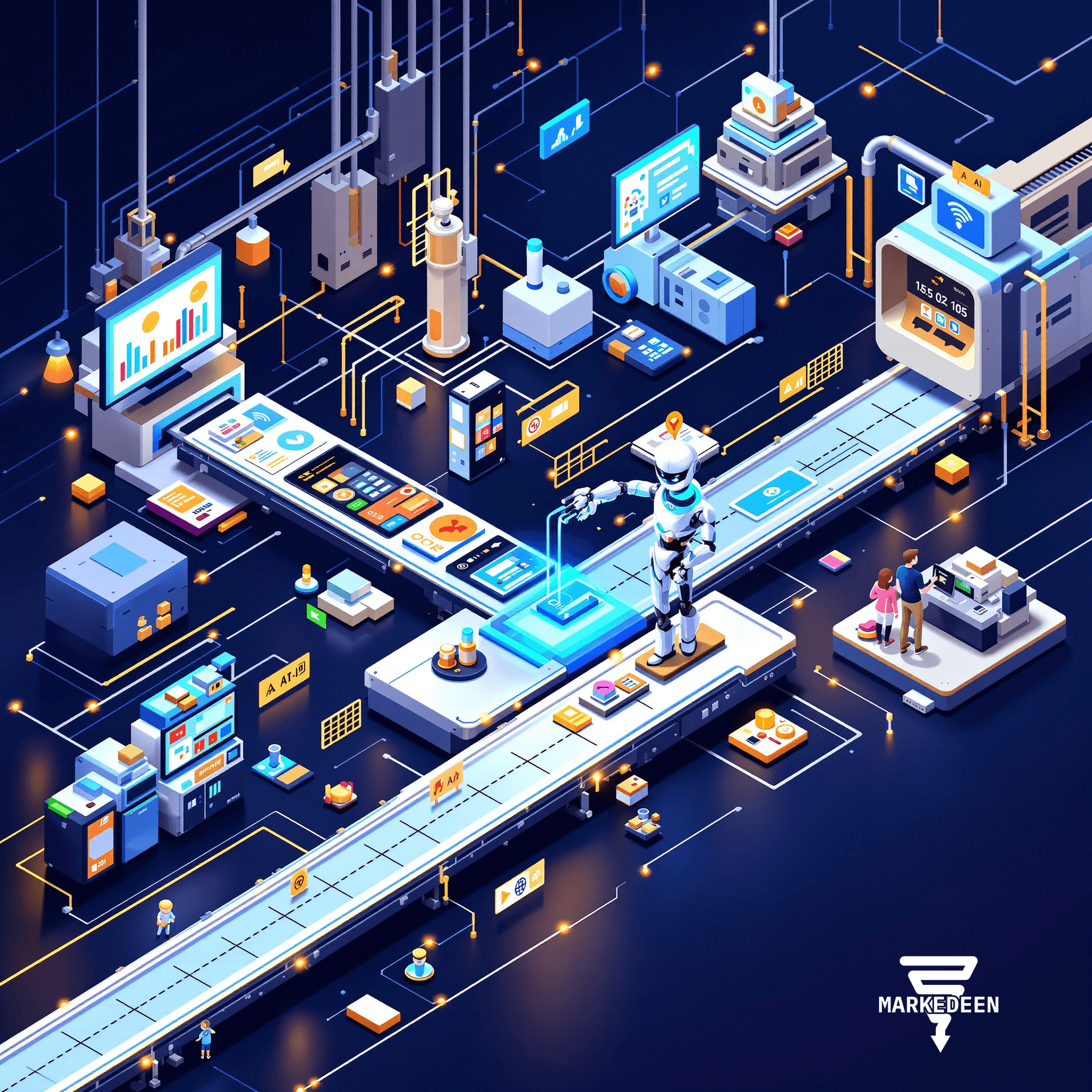
The pattern looks like this: a business need surfaces, maybe a product launch, maybe a seasonal campaign, maybe a rapid response to a competitor. Instead of kicking off a multi-week procurement process, you describe the desired outcome in plain language. An agent generates the visual prompt, routes it to the appropriate generative model, retrieves the output, and hands it to a development environment that builds the surrounding page structure. What emerges isn't a mockup or a prototype. It's a deployed, production-ready asset.
The speed matters, but the repeatability matters more.
Once you've built this orchestration layer, you're not just accelerating one project. You're creating a capability that compounds. Every subsequent launch gets faster. Every iteration cycle shrinks. You can test three different visual approaches in the time it used to take to commission one mood board.
This changes how you think about digital presence entirely. Websites stop being static monuments you update quarterly. They become dynamic surfaces you can reshape in response to market signals, customer feedback, or competitive moves. The cost of being wrong drops to near zero, so the cost of not experimenting becomes the actual risk.
We're seeing this play out across client work. A firm that used to lock in their homepage design for six months now rotates hero content weekly based on campaign performance. An agency that used to outsource video production now generates custom assets per client brief, on demand, with no lead time. The constraint was never creative vision, it was production economics. Remove the constraint and the behavior changes immediately.
The technical architecture is straightforward. You need a layer that can translate business intent into model prompts, a routing system that knows which generative tool to use for which job, and a deployment pipeline that takes raw outputs and turns them into functional code. The models themselves are commodity infrastructure, swappable, improvable, irrelevant to your competitive position. The orchestration layer is where the leverage lives.
That's where we focus our work.
We're building systems that let businesses treat generative capabilities as internal utilities, not external services. The goal isn't to make it easier to prompt a model. The goal is to remove prompting from the workflow entirely. You describe the business outcome, the system handles the translation, execution, and deployment. The person running this process doesn't need to know how the models work. They need to know what result the business needs.
This isn't about automation for automation's sake. It's about collapsing decision-to-deployment cycles so you can operate at a tempo your competition can't match. When your competitor is still scoping their rebrand, you've already shipped three variants and have performance data on all of them.
The businesses that move first on this aren't the ones with the biggest AI budgets. They're the ones who recognize that production speed is now a strategic capability, and they're willing to rebuild their operations around it. The technology is ready. The models work. The infrastructure is stable. What's missing is the operational layer that makes it usable for people who have actual business problems to solve.
That's the work. Not teaching people how to write better prompts. Not showing them which buttons to click. Building the systems that let them describe what they need and get back something they can deploy.
If you're trying to figure out how your team moves faster without hiring a production department, we should talk. This isn't a future capability. It's running in production today.
More on Marketing


Want a system like this in your business?
We build the automation behind everything you just read.